I didn't have a rock-bottom moment. I had a Tuesday afternoon in October where I poured a glass of sauvignon blanc at 2:45 PM, drank half of it while scrolling my phone, drove to school pickup at 3:15, and then spent the rest of the evening feeling vaguely guilty and very tired. That was it. No intervention. No crisis. Just a growing awareness that this daily pattern — pour, drink, drive, guilt, repeat — wasn't actually making my life better. Six months later, without the afternoon wine, I'm sleeping better, more patient with my kids, and genuinely less anxious. None of it happened the way I expected.
I want to tell this story the way it actually happened — not the inspirational-memoir version, not the cautionary tale, just the honest, boring, Tuesday-afternoon truth. Because I think there are a lot of moms like me who aren't "in crisis" but who have a quiet voice in the back of their heads asking: Is this actually helping me?
The Ritual I Didn't Realize I Had
Here's what my afternoons looked like for about two years: I'd finish whatever I was doing — laundry, work emails, the perpetual cleaning cycle — and around 2:30 or 3:00, I'd open a bottle of wine. Just one glass. That was the rule. One glass to "transition" into the afternoon chaos of pickup, snacks, homework, sibling fights, dinner prep.
The thing about rules like "just one glass" is that they only work when you're in a good place. Bad day at work? Two glasses. Kid threw a tantrum at drop-off? Glass and a half. Husband traveling and I'm solo parenting for the third night in a row? I stopped counting.
I never got drunk. I never missed a pickup. I never did anything I'd consider irresponsible. And because of that, I never thought I had a "problem." I was just doing what every other mom I knew seemed to be doing — using wine to sand down the sharp edges of the afternoon.
But looking back, I can see the slow creep clearly. What started as a weekend thing became a weeknight thing became an every-day thing. The glass got bigger. The pour got earlier. And I was always, always a little tired.
The Quiet Moment That Changed Things
I'd love to tell you there was a catalyzing event — a scare, or a confrontation, or a moment of dramatic clarity. There wasn't. It was more like a series of tiny observations that I finally stopped ignoring.
I noticed I was always foggy at pickup. Not impaired — foggy. Like there was a thin film between me and my kids during the first hour after school, which is when they most needed me to be present.
I noticed that my sleep was terrible. I'd fall asleep fast (thanks to the wine) but wake up at 3 AM with my heart racing and my mind spiraling about things that, by morning, seemed completely manageable. Research calls this the alcohol-anxiety rebound effect — alcohol suppresses anxiety temporarily but creates a neurochemical backlash a few hours later.
I noticed that I was shorter with my kids in the evening. Less patient. More likely to snap during the bedtime routine, then feel guilty about it, then have another glass to deal with the guilt. I didn't realize it at the time, but I was stuck in exactly the kind of loop that researchers describe in studies on alcohol and maternal burnout.
So one Tuesday, I just didn't pour the glass. Not as a declaration. Not as a "Dry January" or a "30-day challenge." I just didn't do it that day. And then I paid attention to what happened.
Week One: Harder and Easier Than I Expected
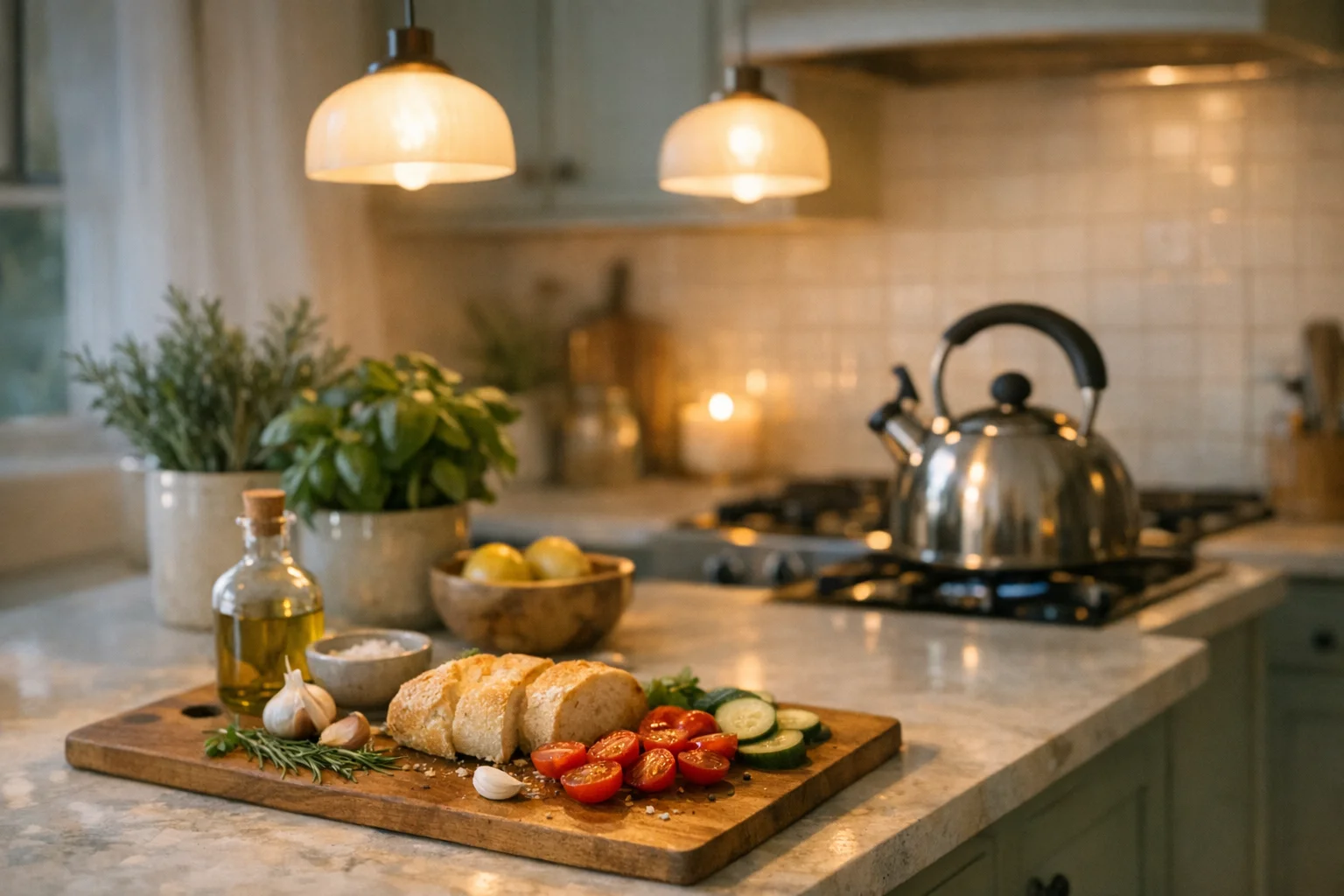
The first afternoon was the hardest. At 2:45, my body basically sent me a memo: It's time. My hand actually reached for the cabinet. I made a cup of tea instead — not because I'm a wellness influencer, but because the kettle was closer than the corkscrew.
What surprised me was how much of the craving was about the ritual, not the alcohol itself. I wanted the marker. The signal that said "hard part of the day: over." The moment of doing something for myself. Research on habit loops — Charles Duhigg writes about this in The Power of Habit — suggests that the cue and the reward matter more than the routine itself. My brain didn't specifically need wine. It needed the transition.
By day three, the 3 AM wake-ups stopped. Just like that. I couldn't believe how directly connected they were. I'd been blaming stress, hormones, my mattress, the temperature of the room — never the two glasses of chardonnay at dinner. A study by Ebrahim et al. in Alcoholism: Clinical and Experimental Research (2013) found that alcohol disrupts the second half of the sleep cycle, reducing REM sleep and increasing nighttime wakefulness. I was a textbook case.
By day five, I woke up without an alarm for the first time in months. I had energy before my coffee kicked in. It felt almost suspicious.
Week Two: The Patience Shift
This is the part that surprised me the most: I was nicer. Not in a dramatic, personality-overhaul way. But in the way I responded to my kids when things went sideways. My six-year-old spilled an entire container of yogurt on the couch — the exact kind of thing that would normally trigger a disproportionate reaction from me — and I just... handled it. Got the towels. Cleaned it up. Moved on.
My husband noticed before I did. "You seem calmer," he said, about ten days in. I hadn't told him I'd stopped drinking. (That's a whole other essay.)
Looking back, this makes perfect neurological sense. Alcohol impairs prefrontal cortex function — the part of the brain responsible for emotional regulation, impulse control, and decision-making. Even moderate daily drinking can keep this area in a state of mild suppression. When I stopped, my brain's executive function essentially came back online. The patience wasn't new. It had just been muffled.
Month One: What My Kids Noticed
About three weeks in, my eight-year-old said something that stopped me in my tracks. We were reading together before bed — something we'd technically been doing all along, but I'd been half-present for months, reading the words while my mind was elsewhere. She looked up and said, "You're reading it better tonight, Mom."
I don't think she meant my reading voice. I think she meant I was there. Actually there.
The neuroscience of the first 30 days without alcohol shows a cascade of recovery: better sleep leads to better cortisol regulation, which leads to improved emotional availability, which leads to deeper presence with the people around you. It's not magic. It's biology. But it felt a little like magic.
My four-year-old, predictably, did not comment on my emotional availability. But he did stop having as many meltdowns at bedtime, which I suspect had something to do with me being calmer during the wind-down routine. Kids are mirrors. They reflect what we're giving them.
Three Months: The Compound Effect
By month three, the changes had compounded. Better sleep meant more energy. More energy meant I was exercising again — nothing intense, just morning walks before the kids woke up. The walks improved my mood. The improved mood made me more patient. The patience reduced the daily friction that used to send me reaching for a glass. It was the opposite of the burnout cycle I'd been stuck in.
Financially, I'd saved about $400. That felt surprisingly significant.
Socially, things were more complicated. A few of my mom friends got weird about it. Not hostile — just awkward. The first book club without wine was uncomfortable in a way that told me how much our socializing had been organized around drinking. (I wrote more about this in how to navigate mom friends who pressure you to drink.)
But some friendships actually deepened. Conversations got more honest. One friend pulled me aside and said, "I've been thinking about doing the same thing." We ended up texting each other through the hardest afternoons. That accountability was worth more than any app or program.
Six Months In: What Actually Changed
Here's the honest inventory, six months out:
What got better: Sleep (dramatically). Patience with my kids (noticeably). Morning energy (consistently). Anxiety levels, especially at night (significantly — the 3 AM spiral is gone). My skin, weirdly. My relationship with my husband, because I was actually present in the evenings instead of numbed out on the couch.
What stayed the same: The stress of parenting. The chaos of bedtime. The feeling of being overwhelmed by the mental load. Cutting out alcohol didn't fix motherhood. It just stopped making it worse.
What was harder than I expected: Social situations. The identity shift — I'd built a small part of my personality around being a "wine mom" and didn't realize it until I stopped. Sitting with uncomfortable feelings instead of pouring over them. The boredom of evenings, at first.
What I didn't expect: How much time I got back. How much better I felt physically. How the change rippled outward into parts of my life that had nothing to do with drinking — I started reading more, sleeping more, worrying less. Not because I became some optimized wellness person, but because I just had more capacity.
What I Want You to Know
I'm not writing this from a place of "I figured it out and you should too." I'm writing it because two years ago, I would have found this helpful. Not a recovery memoir. Not a TED talk about reinvention. Just a normal mom saying: I changed one thing, and the returns were bigger than I expected.
You don't have to call it "quitting." You don't have to make it permanent. You don't have to tell anyone. You can just... try not pouring the glass one Tuesday, and see what happens.
If you're curious about the science behind what happens in those first weeks and months, the article on what happens to your brain after 30 days without alcohol is where I started. If the afternoon craving is the hard part, the 12 things that actually help more than wine gave me ideas when willpower wasn't enough.
And if you're reading this at 2:45 on a Tuesday, just know: I see you. You're not broken. You're paying attention. That's how it starts.