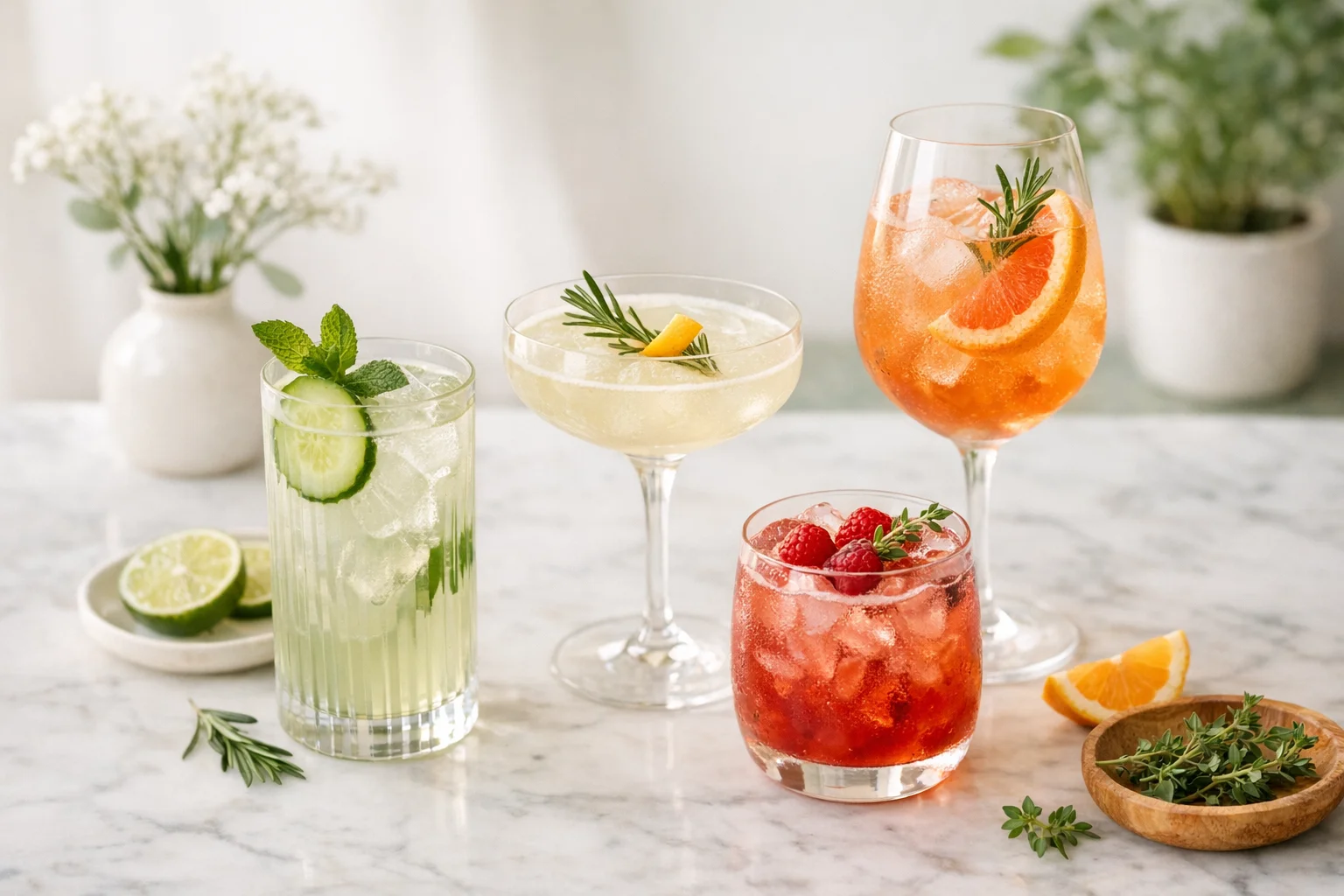
The non-alcoholic drink market has exploded. The best options in 2026 include Athletic Brewing (NA craft beer that genuinely tastes like beer), Surely (NA wines with real complexity), Ghia (a sophisticated bitter aperitif), and Kin Euphorics (functional drinks with adaptogens). The key to making the switch stick isn't finding a perfect replica — it's finding something you genuinely look forward to.
When I stopped drinking wine after bedtime, the hardest part wasn't the alcohol itself — it was the absence of the ritual. The sound of a cork. The weight of a good glass. That first sip that signals: the day is officially over, you are officially off duty. Herbal tea is lovely, but it doesn't scratch the same itch. I needed something that felt like an event, not a consolation prize.
I've spent the past year testing every NA drink I could find. Some were awful (thin, sweet, unmistakably fake). Some were revelations. Here's what's actually worth your money — and a few tips for navigating the weirdly intimidating experience of ordering a non-alcoholic drink at a real bar.
Why the Ritual Matters More Than You Think
Before the product reviews, a quick note on why this category exists and why it works.
Behavioral science shows that habits operate on a cue-routine-reward loop (Duhigg, The Power of Habit, 2012). For most of us, the evening drink isn't just about alcohol — it's about the cue (6 PM, kids in bed, the kitchen finally quiet), the routine (pouring, sipping, transitioning), and the reward (the signal that you're done for the day). When you remove alcohol but keep everything else — the glass, the flavor, the moment — you're working with your habit architecture instead of against it.
This is also why the alternatives I wrote about for the witching hour work: they replace the routine while keeping the cue and the reward intact. NA drinks are one of the most effective versions of this strategy because they preserve the most sensory elements of the original habit.
The NA beverage market grew 33% in 2023 alone (IWSR, 2024), and 39% of new mothers have tried non-alcoholic alternatives. This isn't a niche trend — it's a category that's arrived.
NA Beer: The Category That's Changed the Most
Five years ago, NA beer meant O'Doul's and disappointment. Today it's the most mature and genuinely delicious category in the NA space.
Athletic Brewing — This is the gold standard. Founded in 2018, Athletic brews dedicated NA beer (it's not regular beer with the alcohol removed — it's brewed specifically to taste great without it). Their Run Wild IPA is legitimately one of the best IPAs I've had, period. The Free Wave Hazy IPA is excellent. The Upside Dawn golden ale is perfect for casual sipping. Athletic won multiple awards at the Great American Beer Festival — competing against alcoholic beers. If you like craft beer, start here. ~$10-13 per six-pack.
Gruvi — Gruvi offers both NA beer and NA wine (more on their wine below). Their Stout is surprisingly rich, and the IPA is solid. What I appreciate about Gruvi is the variety — they have styles that Athletic doesn't cover, including a German-inspired lager. ~$10-12 per four-pack.
HOP WTR — Not technically beer, but worth mentioning here: it's sparkling water infused with real hops, plus adaptogens (ashwagandha) and nootropics (L-theanine) for calm. It tastes like the essence of an IPA without any malt body. I love it for afternoons when I want something bitter and refreshing but beer feels too heavy. ~$10-12 per six-pack.
NA Wine: Getting Closer
Full disclosure: NA wine is the hardest category to get right. Removing alcohol from wine changes its body, mouthfeel, and flavor balance in ways that are harder to mask than in beer. That said, the category has improved dramatically.
Surely — The best NA wine I've found. Their sparkling rosé is genuinely lovely — crisp, dry, and complex enough that you don't feel like you're drinking grape juice. The sauvignon blanc is solid. They use a dealcoholization process that preserves more of the original wine's character than most competitors. ~$15-20 per bottle.
Gruvi Dry Secco — Gruvi's sparkling wine is light, bubbly, and slightly sweet — think Prosecco vibes rather than Champagne. It's excellent for celebrations or when you want something festive. Less complex than Surely but more fun. ~$12-14 per four-pack.
Honest take: If you were a dedicated wine lover, NA wine might not fully satisfy. Instead, consider pivoting to a different category entirely — many former wine drinkers I've spoken to prefer something like Ghia or a craft NA cocktail to a wine substitute that reminds them of what they're missing.
NA Spirits and Aperitifs: Where It Gets Interesting
This is where the NA space gets genuinely creative — drinks that aren't trying to replicate alcohol but are carving out a new category of sophisticated, complex, adult beverages.
Ghia — My absolute favorite discovery. Ghia is a Mediterranean-inspired aperitif: bitter, herbal, citrusy, with notes of rosemary and ginger. Mixed with tonic water over ice with a citrus peel, it's a genuinely sophisticated evening drink. The bitterness is key — it signals "this is an adult beverage" to your palate in a way that sweet drinks can't. ~$33 per bottle (makes ~8-10 drinks).
Seedlip — The original NA spirit, launched in 2015. Seedlip comes in three varieties: Garden (herbal, pea and hay notes), Spice (aromatic, allspice and cardamom), and Grove (citrus). Mixed with premium tonic, it makes an excellent NA G&T. The flavor is subtle — some people find it too subtle — but it's elegant and well-crafted. ~$30-35 per bottle.
Monday Gin — If you specifically miss gin, Monday is the closest replica I've found. It has real juniper, citrus, and botanical notes. Mix it exactly as you'd mix gin — with tonic, cucumber, or in a mocktail. ~$30-35 per bottle.
Curious Elixirs — Ready-to-drink NA cocktails in a bottle. No mixing required. Their No. 1 (inspired by a Negroni) and No. 3 (inspired by a Paloma) are standouts. These are ideal for social situations where you want to grab something from the fridge without the production of mixing a drink. ~$40-45 per four-pack.
De Soi — Katy Perry's NA aperitif brand. Two flavors: Golden Hour (with lemon balm and ashwagandha) and Purple Lune (with tart cherry and reishi). They're sparkling, lightly sweet, and very pretty in a glass. More "fancy sparkling drink" than "spirit alternative," but delightful for weekend evenings. ~$25 per bottle.
Functional Beverages: Drinks That Do Something
This is the newest and most interesting subcategory: drinks formulated with adaptogens, nootropics, and botanicals designed to produce a specific effect — calm, focus, social ease — without alcohol.
Kin Euphorics — Kin's flagship "Lightwave" is specifically designed for evening wind-down: it contains reishi mushroom, L-theanine, and GABA (yes, the neurotransmitter alcohol hijacks — see our piece on the anxiety-drinking cycle). It tastes like a sparkling botanical cocktail with vanilla and citrus notes. Does it "work"? I notice a genuine sense of calm about 20 minutes after drinking it, though that could partly be the ritual. The ingredients have evidence behind them: L-theanine promotes alpha brain wave activity associated with relaxation (Nobre et al., Nutritional Neuroscience, 2008). ~$39 per four-pack.
Three Spirit — A UK brand making "functional botanical elixirs" in three varieties: Livener (energizing), Social Elixir (mood-lifting), and Nightcap (calming). The flavors are complex and herbal — more like drinking a botanical tincture than a cocktail. Not for everyone, but fascinating if you're drawn to herbalism. ~$35-40 per bottle.
Everyday Alternatives: Simpler Options That Work
Not every evening requires a $35 bottle of boutique aperitif. Here are the simpler, cheaper options that genuinely satisfy.
Olipop and Poppi — Prebiotic sodas that taste significantly better than traditional soda and have the added benefit of gut health support. Olipop's Vintage Cola and Classic Root Beer are excellent. Poppi's Raspberry Rose is unexpectedly sophisticated. At $2-3 per can, these are the most affordable option on this list and make great mixers.
Sparkling water + bitters + citrus — The bartender's shortcut. A splash of Angostura bitters in sparkling water with a lime wedge is essentially a deconstructed cocktail for under $1. It's bitter, complex, and looks like a real drink in a rocks glass. This was my go-to for the first two months.
Quality herbal tea — I know, I know — "drink tea" feels like unsolicited advice from someone who's never actually wanted wine. But hear me out: a genuine tea ritual — specific cup, specific blend, a few minutes of dedicated preparation — can be surprisingly effective. L-theanine in green and black tea promotes calm without drowsiness (Nobre et al., Nutritional Neuroscience, 2008). Chamomile and passionflower have mild anxiolytic properties. Make it special: use loose leaf, heat the cup, add honey. ~$8-15 per tin.
Amy's Actual Evening Lineup
For what it's worth, here's what I actually keep stocked:
- Weeknights: Ghia and tonic (my go-to "wine replacement"), or sparkling water with bitters
- Weekends: Athletic Brewing Run Wild IPA, or a Curious Elixirs No. 1
- After bedtime ritual: Kin Euphorics Lightwave, or chamomile tea with honey in a specific ceramic mug I bought just for this purpose
- Social events: Surely sparkling rosé (for wine situations) or Athletic Brewing (for beer situations)
- Quick fix when the 6 PM craving hits: Olipop root beer in a glass with ice
Total monthly spending on NA drinks: roughly $60-80. For context, I was spending approximately $150-200 per month on wine. The savings alone pay for the better sleep, clearer mornings, and absence of 3 AM anxiety.
Tips for Ordering AF at Restaurants and Bars
The social mechanics of ordering a non-alcoholic drink can feel surprisingly fraught. A few things I've learned:
- Order by name, not by category. "I'll have an Athletic Brewing IPA" sounds confident. "Um, do you have any non-alcoholic options?" invites a conversation you might not want.
- Call ahead. More restaurants stock NA options than you'd expect, but it varies. A quick call or menu check saves the awkwardness of discovering they have nothing.
- The bitters trick works everywhere. Every bar has Angostura bitters, sparkling water, and lime. Ask for a "sparkling water with a dash of bitters and lime" — it arrives looking like a cocktail and tastes like one.
- Tip as if it's a real drink. This signals to the bartender that you're a valued customer regardless of alcohol content.
- Nobody is watching as closely as you think. After the first few minutes, nobody notices or cares what's in your glass. (For more on this, see how to navigate social pressure.)
The NA drink space is evolving so rapidly that this list will likely need updating within six months. But the options above have been consistently excellent, and any of them can make the transition from drinking to not-drinking — or drinking less — significantly easier. The ritual doesn't have to end. It just gets an upgrade.
If you're new to rethinking your relationship with alcohol, start here for a guided introduction to everything on this site.